Bringing live experiences into Zvuk. Spoiler: we 6x'd!
At Zvuk, a top 2 Russian music streaming service, I made discovering and buying tickets for favourite artists seamless and familiar. Having focused on clarity, emotional connection, and instant decisions with visible prices, cashback incentives, and artist visuals, we sold 6 times as many tickets compared to the previous iteration, and built a complete music experience within the ecosystem
Context
Zvuk is the most experimental Russian music streaming service, 4 million MAU. It’s part of the Sber ecosystem, led by the biggest bank in the country.
We believe that our goal is to serve our listeners the most complete music experience. It’s only natural that we’re tackling the live part of it. To tell the truth, we kinda did it before, but it didn’t go all that well. This time, we were aimed for the best yet fast results. Huge help came from our ecosystem partner Afisha.ru that sells over 1 million tickets annually. We integrated their API for the actual buying process. The only part left to do was embedding it into our product.
There was a huge snag, too. Remember the API thing? The first iteration of it imposed fixed backend routing:
–
Live event
–
City
–
Venue
–
Ticket for 1 September
–
Ticket for 9 September
–
Another venue
–
Ticket for 2 September
–
Ticket for 4 September
–
Another city
Process
Being unnatural, this structure would’ve created too much friction for our users. They would’ve given up entirely before finding the exact ticket, which meant no sales. Browsing by date is what people are used to.
I spent a good week time persuading the Afisha team to output linear structure organised by date in the API. 2 reasons hit them best: smooth and familiar customer experience and consistent representation of them in our product.
Some useful things such as suggesting tickets based on location and personalised discovery we’re keeping for the future.
–
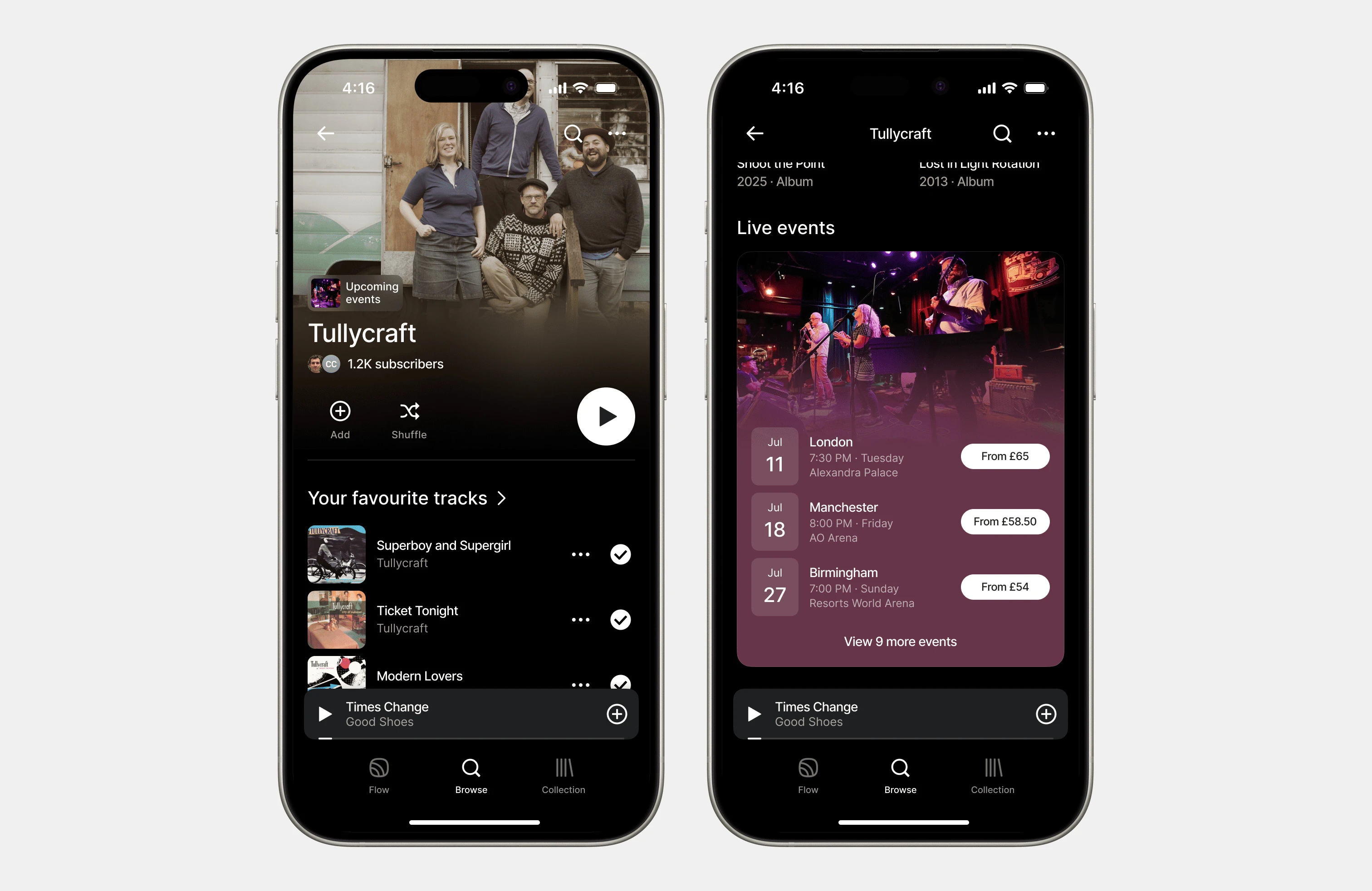
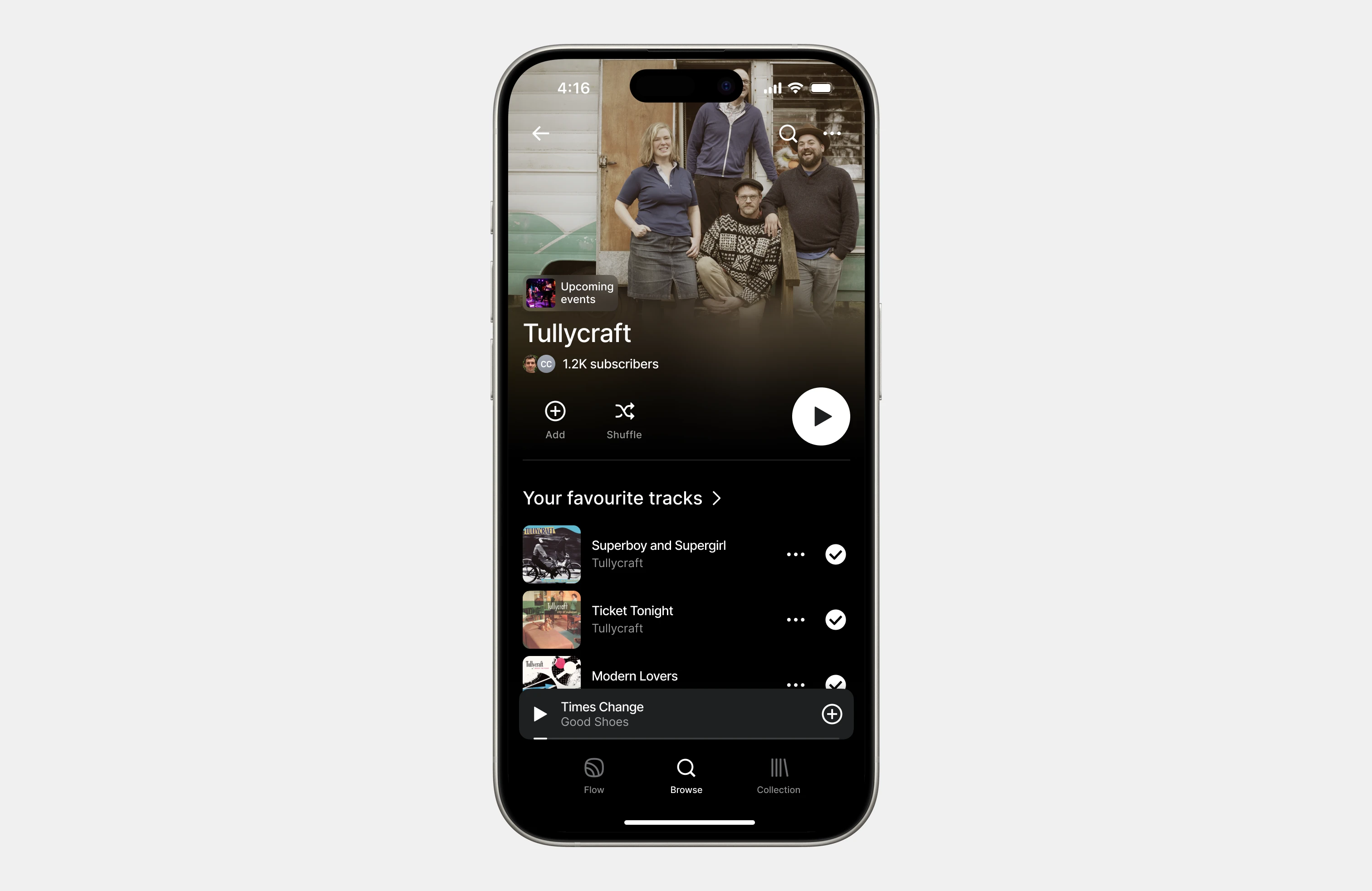
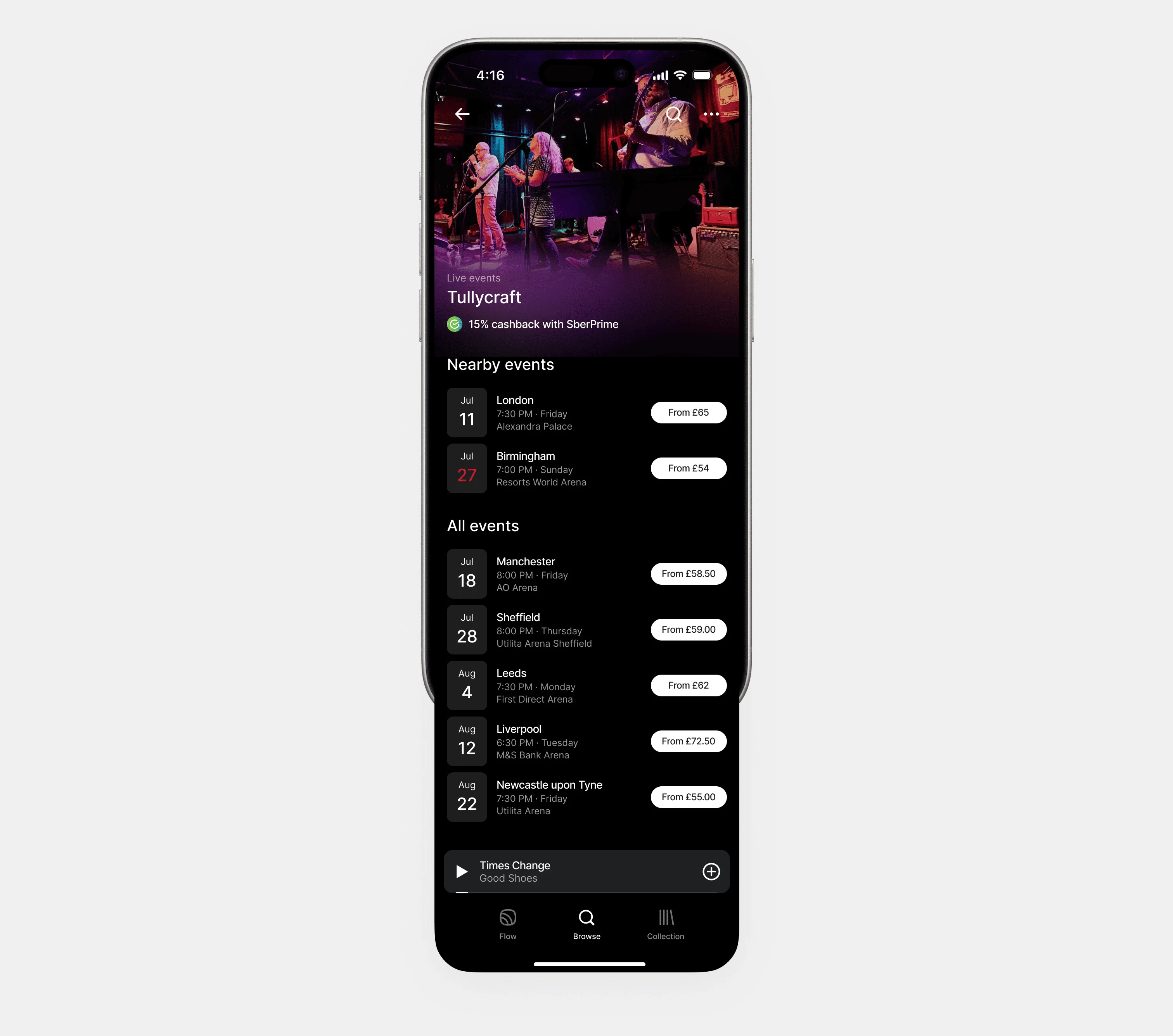
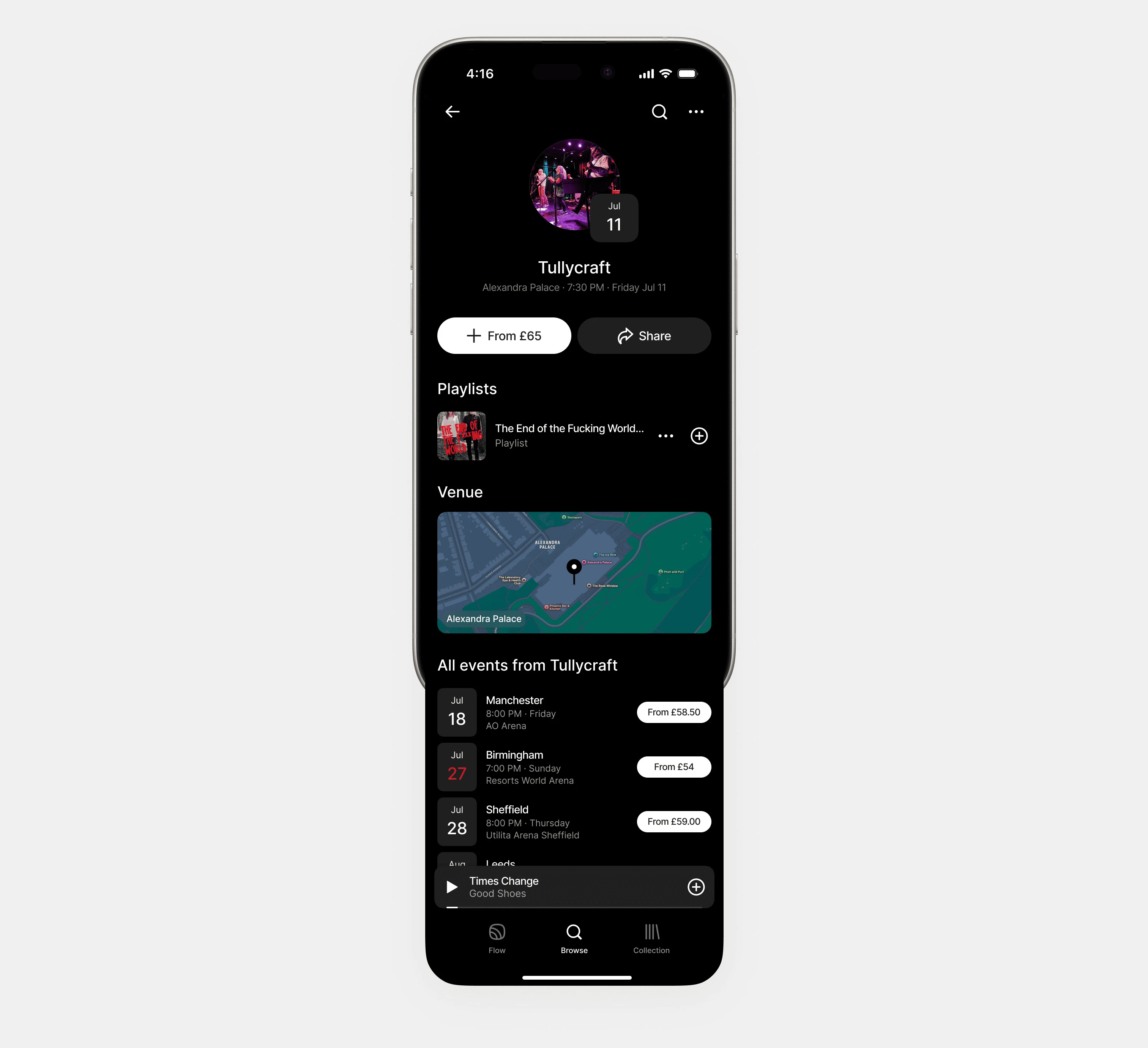
Discoverable on the artist page, so we can show raw unpersonalised tickets
–
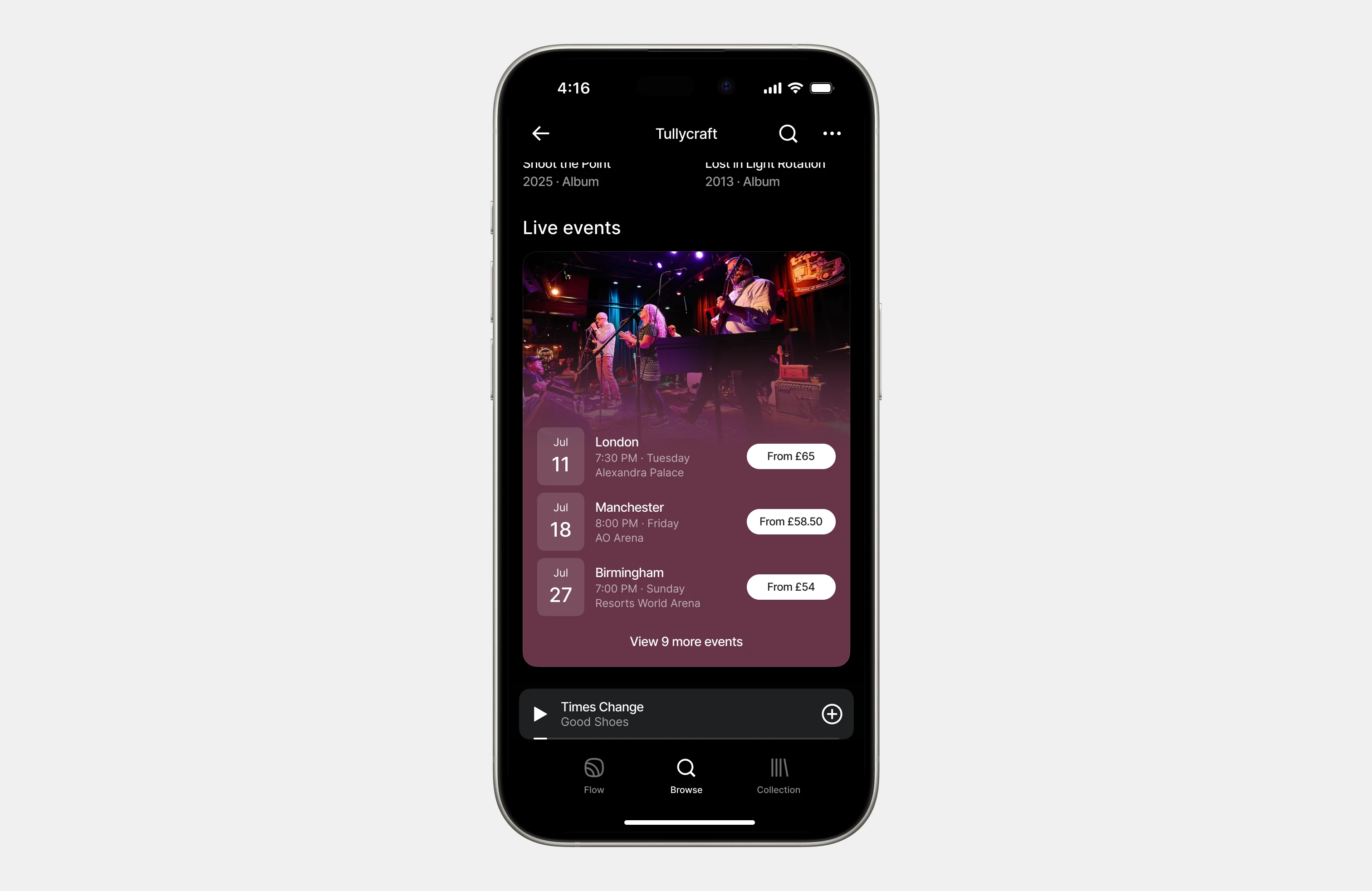
Showing the price right away along with the date and the venue, so the user can make a decision on the spot
–
Giving cash back as a strong incentive
–
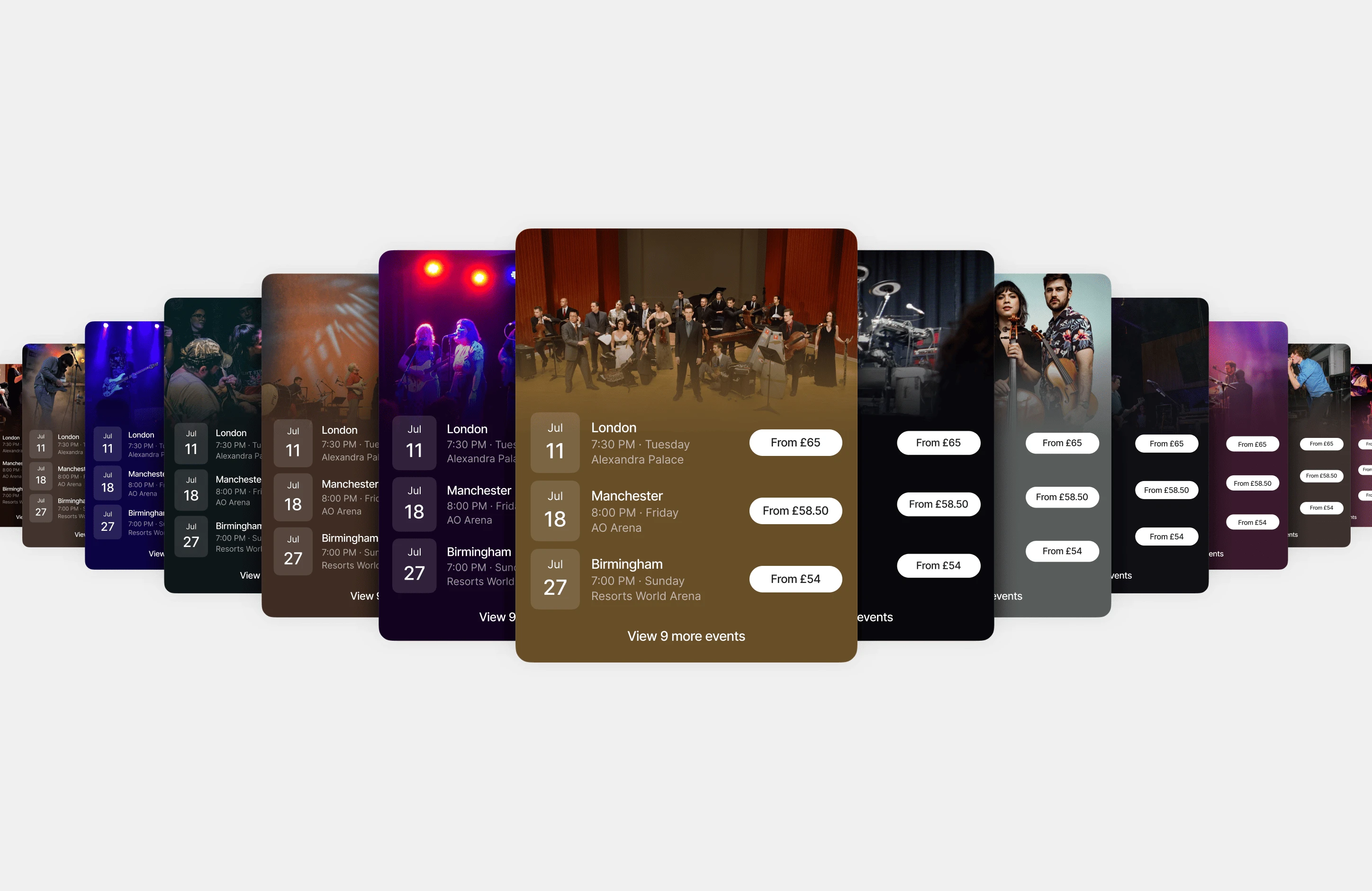
Showing the artist’s photo to ensure emotional connection
To perfect the gradient mask, I worked closely with the engineering team — each time evading texting since we interpret same terms and speaking made it easier.
We ended up with a preview of 3 tickets and a list of all tickets on a designated page.
Result & learnings
Selling tickets goes a long way, as people sharing the same interest for an artist get to enjoy their favourite music live. Nicely executed with our partners, we’ve made the ecosystem a bit more appealing since it offers a more self-sufficient experience.
And we’ve sold 6 times as many tickets compared to our previous iteration!
The live events feature changed the way we communicated with our product managers. Before they could do some research on their own and throw a tightly-framed task at designers. However, design discovery is key in the beginning of a feature to fast and predictable process and results. Having done it, we would’ve have got to do the persuading part. We try to hop in the task as early as possible to ensure cohesive collaboration with product owners — not competitive.